
The ABCs of Trailers and Rig Configurations
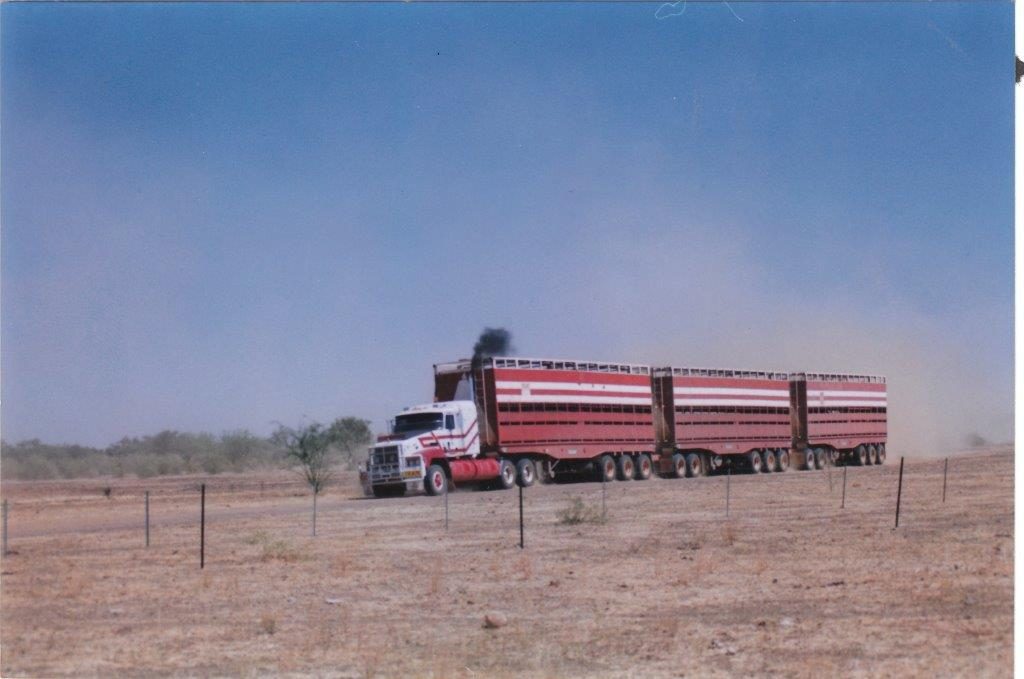
Are you aware of the defining characteristics of A trailers and B trailers? This article is here to help.
It’s not uncommon for truck drivers to confuse the type of trailer they’re hauling. Different configurations, recent trailer developments, and manufacturer updates can be cumbersome to follow.
For example, Byford Equipment had a significant breakthrough in trailer design that’s known as A-Doubles.
Does an A-Double truck ring a bell?
If so, you know it’s a tractor-trailer with a semi-trailer that hauls a drawbar trailer.
More often than not, however, this doesn’t ring the bell of a good number of truckers. Why is this the case?
When it comes to truck configurations, there seems to be widespread confusion about the different combinations. Among them, A and B trailers are common but not exactly clearcut.
This article will attempt to disambiguate A, B, and C trailer configurations for you and point out the potential sources of confusion.
What Is an A Trailer?
A trailers connect to a truck via a dolly, which further attaches to a pintle hook located at the rear of the forward trailer. The dolly may be single or double-axled and it’s licensed as a separate unit.
Now, if you’re hauling a single or double-axle truck trailer, there are specific differences you should know about.
As a rule, single-axle A trailers are used to move between terminals and thus, very common in LTL shipping. For example, transportation companies like Con-way, Estes, and UPS use this trailer configuration.
In comparison, double-axle A trailers are for long combination vehicles where a couple of 53’ or 48’ trailers can be connected together. As you may know, these rigs are typically used for hauling enclosed trailers.
What Is the B-Double?
The B-Double trailer is a combination of two semi-trailers. And it’s believed that there are more than 10,000 of these rigs in Australia.
With B trailers, the lead trailer’s axles stick out and there’s a fifth wheel that adds stability to the bulky configuration.
LTL shipping companies sometimes use this combination, as the lead trailer’s axle slide can make it easier to back up to the loading dock.
In fact, American food products and distribution company Sysco uses this type of truck trailer in its extended distribution network.
Here’s how the logistics usually works at Sysco:
Overnight, a trucker would haul a set of 2 trailers to a location about 800km from the distribution centre. The trailers are to be broken up upon arrival and two other drivers would take over and make the final delivery to Sysco customers on the day.
In Canada and the US, B-Double trailers are frequently used for pulling flatbeds, liquid, and bulk merchandise.
It’s important to note that you don’t even have to back up to the loading dock with this type of rig. Most of the time, truckers only go forward with these rigs and this makes the handling much more manageable.
That said, usually, only experienced truckers who are capable of backing giant rigs up to a dock get to work with B-Double trailers.
Speaking of giant rigs, how big are they?
In Canada, the standard 8-axle B-Double truck is rated at a maximum weight 63,500kg. But in Australia, this is raised up to a limit of 68,000kg and the rigs can have 7, 8, or 9 axles.
What About C?
C trailers are a rather rare double-trailer configuration in most parts of the world, including Australia.
Similar to A trailers, the lead trailer hauls a dolly on which the second trailer is attached. Except that with C trailers, there are two pintle hooks instead of one.
As such, the second trailer in a C configuration would have fewer points of articulation and are more stable as a result.
The catch is that connecting the dolly becomes trickier for the limited articulation. As a result of these rigs’ stiffer cornering, the tires on the dolly will also wear out sooner.
C trailers may be rarer, but they’re often used when you need something to pull a long combination vehicle in certain areas. They’re most common in Western Canada.
So… Where’s the Confusion?
Quite often, you might hear something like:
“I hauled off the B trailer and now I’m delivering the stuff in the A-trailer.”
It should be obvious that this driver is referring to a B-Double, but it’s erroneous to call the lead trailer an A trailer. If you recall, B-Double trailers don’t include any A trailers, which is an international convention.
Regulators and truck engineers define A trailers as any trailers that have a drawbar coupling.
With an A configuration, the dolly is part of the coupling system and not a separate trailer as defined. This applies even if the dolly has a fifth wheel or turntable.
By contrast, B trailers have a fifth-wheel coupling that can be a greased plate or a turntable. The B-Double designation is used to reflect the fact that there are two B-type trailers in the rig. This actually started in Canada where the configuration is called a B Train.
In Australia, the name was changed to B-Double, reputedly because it was hard to sell the idea of road trains travelling around the metro areas.
And this, dear readers, could very well be the source of confusion going from within to outside Australia, or the other way around.
Happy Hauling
Be it A, B, or C, these are all quality trailers that have particular usage. Technical specifications and truck configurations can make all the difference. Of course, the freight also plays a part in the choice of configuration.
Preferably, any trucker should be able to make the right choice every single time.
Here’s a quick recap of the main characteristics.
- A trailers – these have a lead trailer and a dolly, rather than two trailers.
- B-Double trailers – this type has two B-type trailers and a fifth wheel.
- C trailers – these have a lead trailer and a dolly equipped with two pintle hooks.
And if you want to know more and check out what’s available on the market new and used, please visit Truck Dealers Australia today.