

Driving in the Rain – Five Tips for Wet Weather Driving Safety
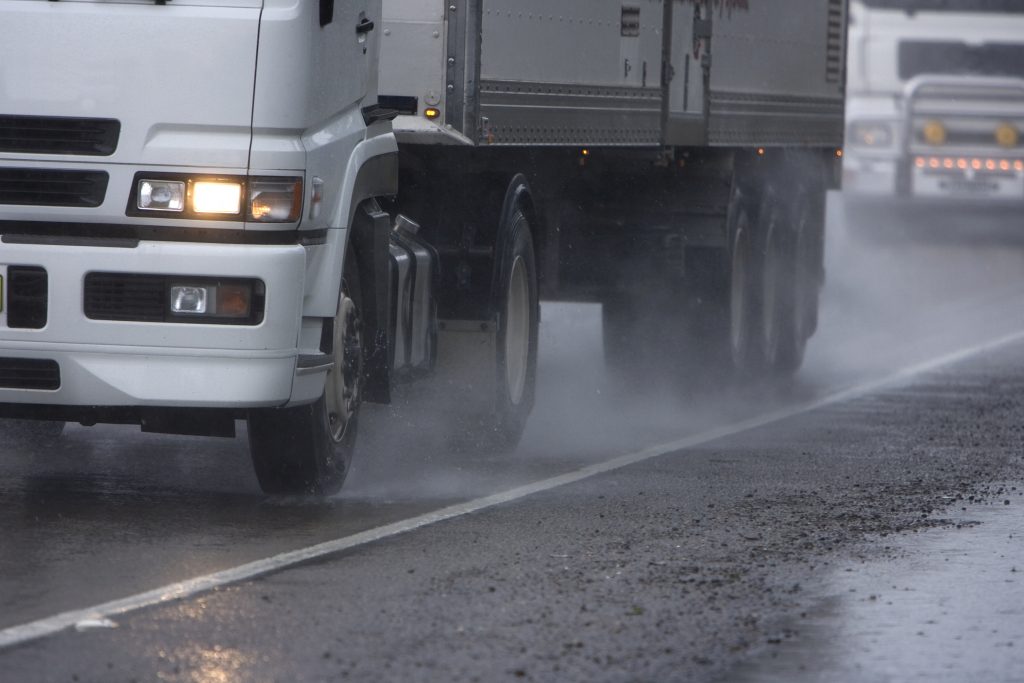
The dry spell ends and you’ve got to deal with wet roads. You need to do much more than turn the windshield wipers on when you’re driving a truck in wet weather.
Whenever it starts to rain, truck drivers have to become extra vigilant. You’re driving a much heavier vehicle than most, which means your stopping distance increases and the truck’s handling feels looser.
If you’re not paying attention to driving safely, you could end up like the driver in this news story.
The Courier recently reported on a Ballarat-based truck driver who’s facing a charge of dangerous driving.
Andrew James McKay allegedly caused a fatal collision that took the life of another driver. The crash occurred when McKay’s trailer detached from his truck while driving.
Wet weather played a role in the crash and had caused an advisory speed limit of 80kmph to get placed on the road. However, prosecutors allege that Andrew was driving above this recommended limit at the time of the crash.
That case is still ongoing and McKay has pled not guilty to causing a deadly accident by dangerous driving.
However, it highlights just how dangerous it can be to drive a truck on wet roads.
So, we come to our key question – how do you drive a truck safely when the rain starts to pour?
These are our five wet weather driving tips.
Tip #1 – Plan Your Trip Beforehand
It always helps to have an idea of what you’re heading into before you set out on a truck journey.
Check the forecast for any signs of rain. If you find an area that’s likely to experience very heavy rain, it’s best to avoid that route altogether. Try to find a safer alternative using a map or route-planning software.
Speaking of route-planning, it can also help you to avoid potential flood dangers. You may have a big truck, but it’s still at risk of breaking down if you try to drive it through deep water. Never overestimate the capabilities of your truck when the weather gets wet.
Instead, plan to avoid potential hazards that could prevent you from completing your journey.
Tip #2 – Change Speeds Very Gradually
Sudden changes in speed can prove lethal when you’re driving in wet weather. For example, let’s say that you slam on the brakes. The truck’s wheels lock in place and you end up in a skid that’s almost impossible to escape from thanks to the wet roads.
You lose control of the vehicle and put yourself and all drivers around you at risk.
To avoid that situation, every change in speed has to happen gradually. Always ease your foot off the accelerator when you want to slow down. You need to apply that same delicate touch to the brakes while keeping a firm hand on the steering wheel.
Your ability to anticipate what’s going to happen on the road ahead will play a key role in keeping you safe. As long as you know what’s coming, you shouldn’t need to change speeds suddenly.
Tip #3 – Maintain a Larger Following Distance
The car in front of your truck represents one of the biggest dangers to you. If something goes wrong, that car’s likely going to be the thing that your truck hits.
Your job is to make sure the car in front isn’t a danger to your truck. And on top of that, you need to make sure that you’re not a danger to the other driver.
This is where increasing your following distance becomes so important on wet roads.
Again, remember that you’re driving a very heavy vehicle. Even the slightest amount of water can increase your stopping distance dramatically. If the gap between your truck and the car in front is too small, you can almost guarantee an impact if that car has to stop suddenly.
Of course, the truck also requires a larger stopping distance when you’re coming up to traffic lights and other natural stops.
For large trucks, that stopping distance can exceed 150 metres in dry conditions. In wet conditions, you will need to allow for as much as 200 metres or more.
Tip #4 – Conduct Checks Before Driving
It’s always a good idea to make sure your truck is in good condition before you head out on the road.
When you anticipate wet weather, there are several checks that are absolutely crucial.
You want to make sure that your brakes are in tip-top condition, as worn brakes will increase your stopping distance.
You also need to make sure that the windshield wipers work and the headlights function properly. Wet weather often lowers visibility, so you need to take every precaution to ensure you see as much as possible on the road.
You should also check your turn signals and brake lights before driving. Remember that safety on wet roads is as much about making sure that other drivers know what you’re doing as it is about your driving.
Tip #5 – Avoid Dirt Roads
The added weight of a truck makes it very easy for the vehicle’s wheels to get stuck in dirt roads. The wet weather turns the dirt into mud, which creates a dangerous trap for your vehicle.
If you absolutely must drive over a dirt road, do your best to drive in the tracks that other vehicles leave behind.
But ideally, you’ll avoid dirt roads entirely to ensure your truck doesn’t get trapped.
Drive Safely When the Rain Starts Falling
With these wet weather driving tips, you lower your chances of running into problems on wet roads.
The key to all of this is to not let your concentration waiver when you’re driving. It only takes a moment of lapsed judgement for an accident to occur. And that danger intensifies when you’re driving in less-than-ideal conditions.
Make sure you conduct your checks and plan your route out beforehand. When you’re driving, aim to anticipate what’s ahead so you don’t have to make any sudden decisions.