
Drive Through Rain: Helpful Tips While Driving On Rainy Weather Conditions
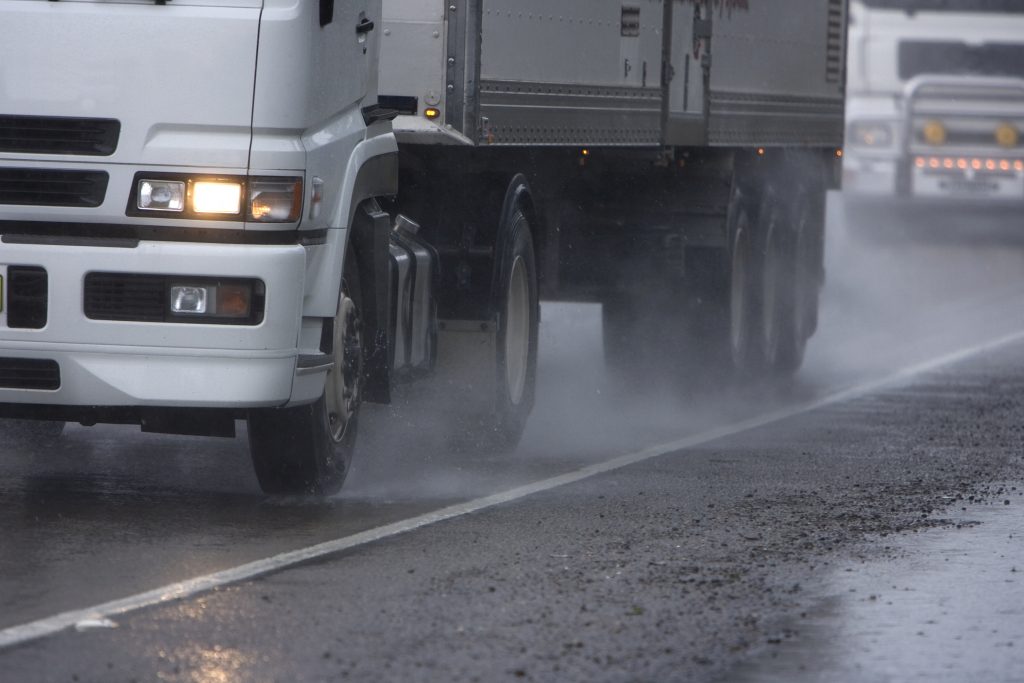
You already know that it can be dangerous and tiring to drive in the rain. But you can follow these wet weather driving safety tips and ensure you have a safe trip.
Imagine that you’ve been on the road for hours hauling a heavy load. All of a sudden, you drive into a blizzard on a six-lane highway that goes on for miles.
Such conditions can wear down even the most experienced truckers.
And to make matters worse, you still have your deadline to worry about.
That said, to lessen your worry, this article aims to dispense five helpful driving in the rain safety tips. They are there to help you think faster and endure the weather like a champ.
Five Wet Weather Driving Tips
Tip #1 – Stay Alert
Staying alert means keeping your eyes on the road and traffic no matter what. Sure, you already know that, but how do you do it under heavy rain?
First of all, you want to keep distractions at a minimum. Do not accept phone calls unless absolutely necessary. And you may even want to shut off the music and anything else that could pull your eyes away from the road.
You shouldn’t be eating or drinking, either. The consequences of one second’s lapse in focus can be dire.
Also, make sure to keep both hands on the steering wheel to get a feel of how your truck behaves under heavy rain. That will help you compensate when the road itself isn’t in the best condition.
Finally, if you’re sleep-deprived, it’s best not to drive at all. Sleep deprivation is the worst enemy of focus even in optimal road conditions. So, make sure you’re well-rested before hitting the road, especially when you know that it might rain.
Tip #2 – Beware of Hydroplaning
How does it feel to hydroplane?
The steering wheel will feel light and there could be a bit of lag between your steering and the tyres’ response. This is normal and you shouldn’t panic when you realise that you’re hydroplaning.
Reduced traction is expected on wet roads and you only have to reduce your speed to regain control. With that said, you don’t want to lift your foot off the gas pedal abruptly.
Reduce speed slowly and focus on how the truck responds. Don’t even touch the brakes as it could make things worse and cause you to lose control.
Keep in mind that there’s more control on the front tyres when the steering wheel becomes heavier. Above all, remember to follow this next tip at all times…
Tip #3 – Keep Your Distance
As a rule, there should be a six-second distance between you and the traffic ahead.
This is the minimum requirement, so you’re free to set a longer distance. You may want to do that based on how heavy the rain is. It may also depend on the traffic and other road conditions.
Always remember that it’s often much easier to compensate for lost time than to deal with a collision.
Lastly, if you’re not sure about the correct distance, you can count the time when a vehicle overtakes you before you start to catch up. Or, wait for a specific time frame before you pass a sign and access a highway.
Tip #4 – Drive Below the Limit
Driving below the speed limit is one of the most critical driving in the rain tips.
Why?
Driving at a lower speed increases the friction between the road and the tyres, essentially making the road less slippery.
You may lose a third of the traction when driving in heavy rain, which greatly increases the risk of skidding and hydroplaning. But if you slow down, there’s more room to stop or manoeuvre your truck out of danger.
And no, driving below the limit doesn’t necessarily mean that you’ll miss your deadline. You can still get there in time. But if you push your luck, the risk of an accident may increase so much – it’s just not worth the risk.
Also, weather conditions could go from bad to worse in no time. You don’t want to wait until it happens to hit the brakes. You want to be ready for that instead.
Tip #5 – Make Sure Your Headlights Are on at All Times
Torrential rain reduces visibility to the point where it’s hard to make out any vehicles in front of you. Add the slippery road to that and there’s a greater possibility of skidding, particularly when you suddenly brake or switch lanes.
Due to that, you should keep the headlights on even when you’re driving during the day. You’ll improve your vision and the visibility of your truck to other drivers. Also, it will be easier to anticipate other drivers’ behaviours based on their signalling.
The art of driving in the rain is to think proactively and develop a sense of anticipation for the traffic movement ahead. But you can’t achieve that unless you see what’s in front of you.
Haul Loads Safely
The truth is that it doesn’t matter how experienced or skilful you are. Heavy rain creates a barrier between you and the road and other road users. That’s why it’s absolutely necessary to follow driving in the rain safety tips.
To reiterate, safe driving in the rain means remaining laser-focused when you’re on the road and always maintaining a safe distance and speed.
This article should have given you enough to reach your destination safely even when it pours. But if you think you could use more tips, or perhaps you’re interested in getting a new truck that’s better equipped for driving in the rain, visit Truck Dealers Australia and check out the latest listings.